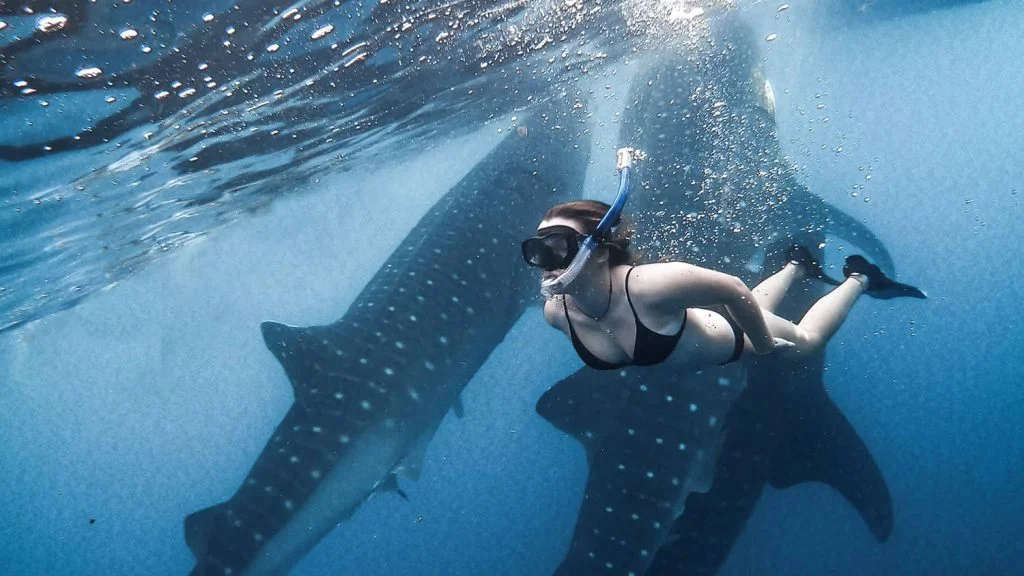
The first time I slipped into the calm water of Saleh Bay, I wasn’t prepared for how quiet everything felt. The boat floated behind me like it was holding its breath, the early light flickered over the surface, and I could sense the shift from the world above to the mysterious one below. Snorkeling does that—it reminds you instantly that you’re not in your own territory anymore.
Then it happened. A shape, larger than anything I had ever seen underwater, emerged gently from the blue. A whale shark gliding past with total ease, as if the ocean itself had formed around it. I stayed still, floating, barely kicking. Something about the moment demanded respect.
It was the first time I truly understood what people mean when they say, “We’re only guests in the ocean.”
Seeing the whale shark in Sumbawa like that—unprovoked, unbothered, completely at home—set the tone for how I approach every snorkeling trip now. And honestly, it’s a mindset every traveler, diver, and ocean lover should carry with them.
Being a Guest Changes the Experience
Snorkeling is often treated like an adventure sport. People want photos, close encounters, and dramatic stories to share later. But the ocean doesn’t operate on our expectations. It has its own rhythms, its own rules, and its own residents—residents who have been there long before we arrived with our masks and fins.
When you start thinking of yourself as a guest, not an intruder or an explorer, everything shifts. Your movements become quieter. Your breathing slows. Your attention widens. You stop trying to interact and start trying to observe.
It’s like walking into someone’s home. You wouldn’t rearrange their furniture, run around wildly, or shout. You’d look around respectfully, appreciating the space for what it is. The ocean deserves that same level of care.
The Whale Sharks of Sumbawa Remind Us of Our Place
Saleh Bay in Sumbawa is special for many reasons, but the presence of whale sharks might be the most magical part. They roam freely, approaching the traditional fishing bagan platforms with a kind of calm curiosity. Locals have seen them for years, moving with the rhythm of the sea, returning season after season.
Swimming near them teaches you humility. They’re huge—toweringly huge—but also gentle. Their spotted patterns shimmer in the light, and their movements feel unhurried. Not once did I feel threatened. If anything, I felt honored.
Encounters like these remind you why the guest mindset matters. This isn’t our world. We’re lucky just to witness it.
Entering the Water With Intention
Before I snorkel anywhere—Lombok, Gili Trawangan, Gili Air, Gili Meno, or Sumbawa—I take a moment to ground myself. A kind of quiet reminder: move slowly, stay aware, be grateful.
Here are small but meaningful shifts that make snorkeling more respectful and more rewarding:
- Float instead of chase. If an animal wants to come close, it will.
- Keep your arms tucked, your fins gentle, your presence quiet.
- Never touch anything—coral, fish, turtles, or whale sharks.
- Give every creature room to move freely.
- Treat the seafloor like someone’s garden: beautiful, fragile, off-limits.
The best moments underwater often come when you do nothing at all.
Choosing Tours that Respect the Ocean
One thing I really appreciate in Sumbawa is how some local operators treat marine life with genuine reverence. They aren’t trying to force dramatic encounters. They don’t encourage touching or crowding the wildlife. They observe, educate, and protect.
This is especially important when visiting places where whale sharks naturally appear. Supporting operators that prioritize conservation helps preserve the delicate balance that allows these giant creatures to thrive.
If you’re heading to Saleh Bay, look for tours that teach guests how to behave in the water, share knowledge about local culture, and place the animals’ comfort above everything else. A great example is the Saleh Bay whale shark tour, where the approach is built around mutual respect, slow movements, and genuine appreciation for the animals’ natural behavior.
The right guide doesn’t just show you wildlife—they show you how to exist around it.
A Story That Stuck With Me
On my second visit to Sumbawa, I met a solo traveler who’d been snorkeling near the whale sharks earlier that morning. She described a moment when one shark slowly approached her, gliding just close enough for her to see the details of its skin. She froze—not out of fear, but out of reverence.
“He looked at me,” she said. “Or at least it felt like he did. And I realized how small I am here.”
That’s the magic of the ocean. Not the adrenaline of being near something huge—but the quiet truth that we’re part of something far bigger than ourselves.
The Ripple Effect of Kind Behavior
When you snorkel gently, others start following your lead. I’ve seen it happen in groups many times. One person floats calmly instead of rushing forward, and suddenly everyone else slows down too.
Travelers often learn by watching each other. And whether you realize it or not, choosing to behave thoughtfully influences the whole group.
Your presence in the water becomes an example. A subtle reminder: we’re here to observe, not disturb.
What the Ocean Teaches Us If We Let It
Every time I leave the water, I feel like the ocean taught me something new. Patience. Stillness. Awareness. Respect. And above all, humility.
We come from busy worlds full of noise and movement. But underwater, those things lose their meaning. The rules change. The pace slows. And if you’re willing to embrace that shift, your entire snorkeling experience becomes deeper and more memorable.
And when you swim near the whale shark in Sumbawa, that mindset becomes even more important. They are ancient travelers, gentle giants, and living reminders of the beauty of our planet.
The least we can do is meet them with respect.
Carrying the Mindset Forward
I think about this guest mentality even when I’m not in the water. It’s a way of traveling that inspires more care, more observation, and more gratitude. Instead of taking from a place, you appreciate what it gives you.
And maybe that’s the real purpose of snorkeling—not just seeing what’s down there, but learning how to move through the world with more kindness.
Because when you treat the ocean as a home you’re entering—not a playground you’re entitled to—you start to understand its magic on a deeper level. And you walk away changed, softer somehow, like the tide smoothed the sharp edges you brought in.
That’s the gift the ocean offers every guest who listens.